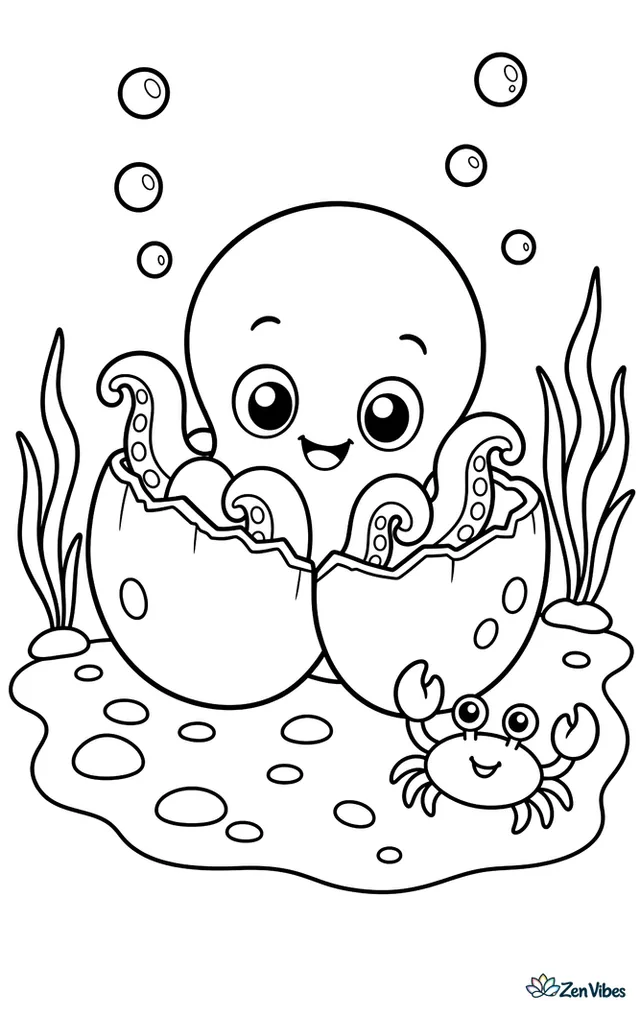
Coconut Octopus Shell
Very easyAges 2–5Portrait

By Zen Vibes Editors · Published · Updated
If your kid likes sea creatures with lots of arms, this is the set you grab first. The pages start with big, clear octopuses doing easy-to-see things, so a little one can get right to coloring instead of hunting for tiny spaces.
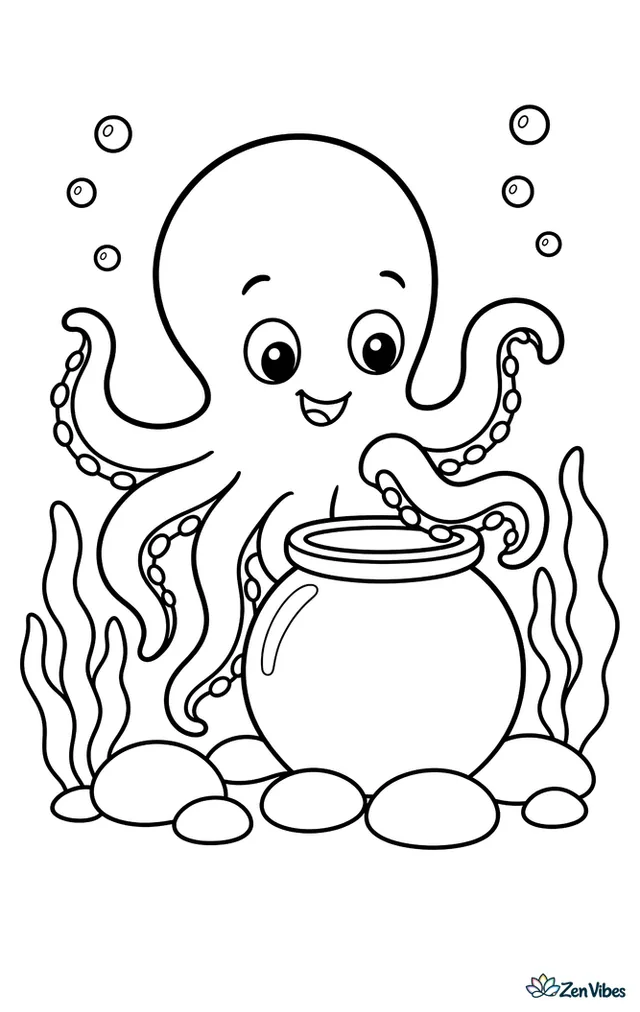
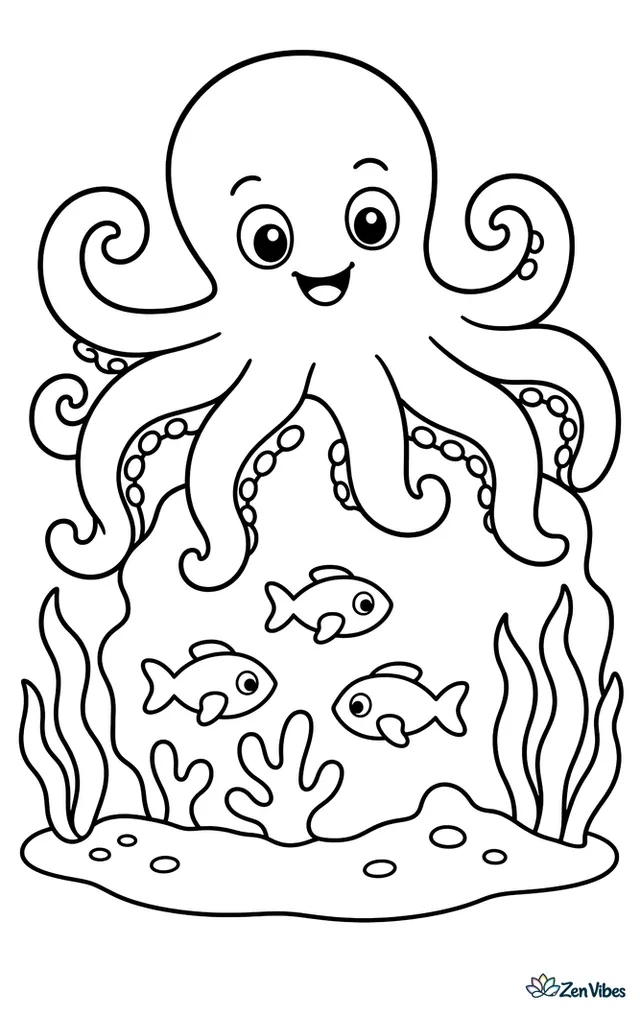
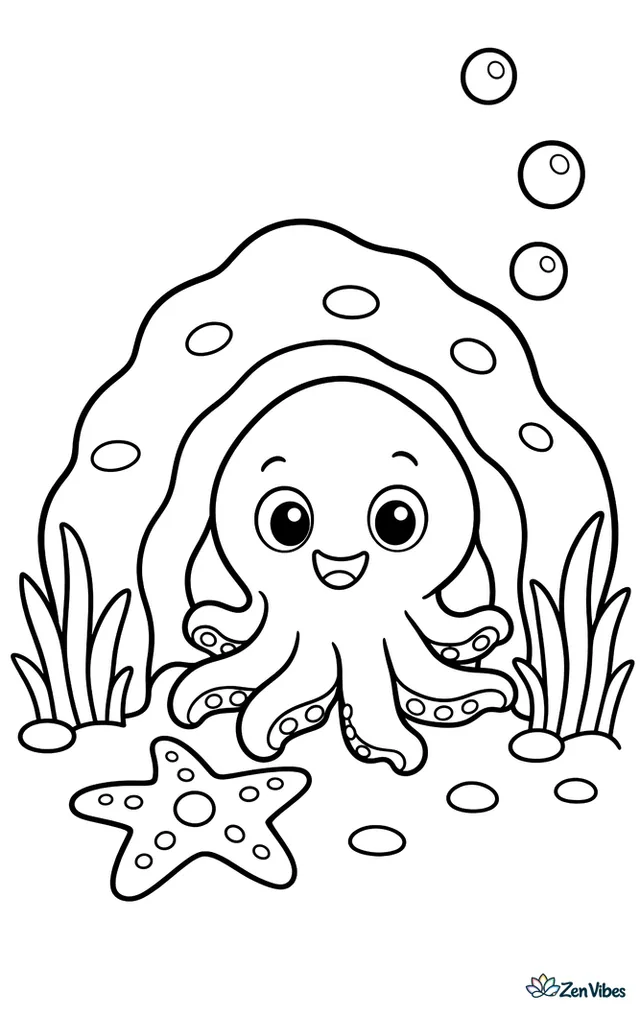
At the simple end, there is a coconut octopus tucked into a shell, a common octopus peeking from a jar, and a tiny pygmy octopus resting in its den. Then the set opens up a bit with a mimic octopus gliding through the water, a giant Pacific octopus winding through kelp, and a veined octopus moving among old bottles on the seafloor. That gives you a nice spread of cozy hiding spots, open water movement, and underwater clutter without ever getting too busy.
This one feels gentler than sharks and a little more focused than whales. It also has more curving shapes and tucked-away corners than crabs, which makes it nice for kids who enjoy tracing around arms, shells, coral, and seaweed. Our favorite is the octopus in the jar, because the scene is so odd and simple at the same time.
Compiled by Zen Vibes Editors.
Click a preview to open its PDF.
Very easyAges 2–5Portrait
Very easyAges 2–5Portrait
Very easyAges 2–5Portrait
Very easyAges 2–5Portrait
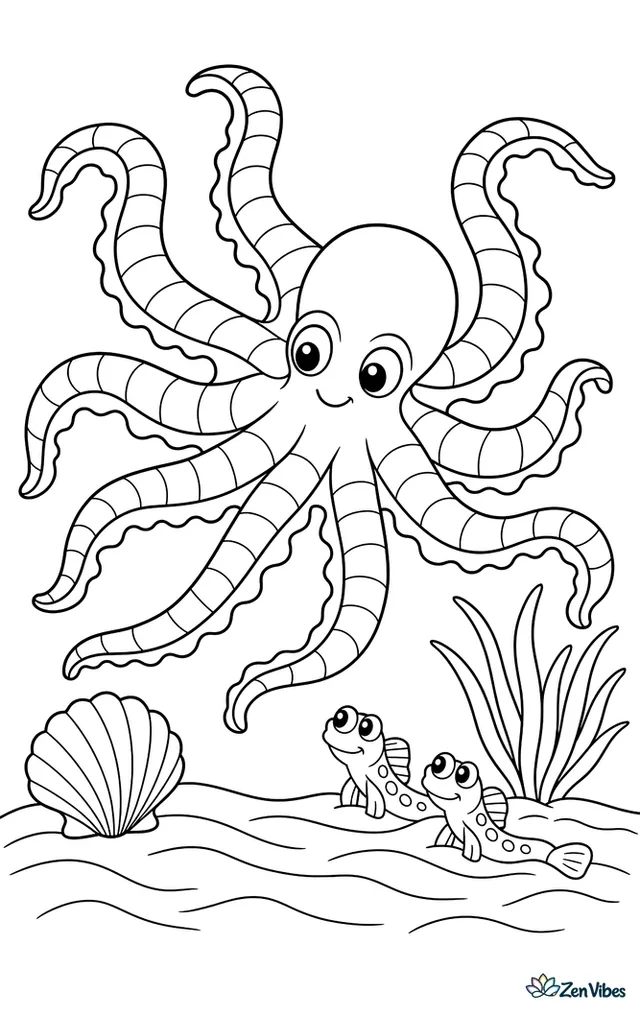
EasyAges 3–7Portrait
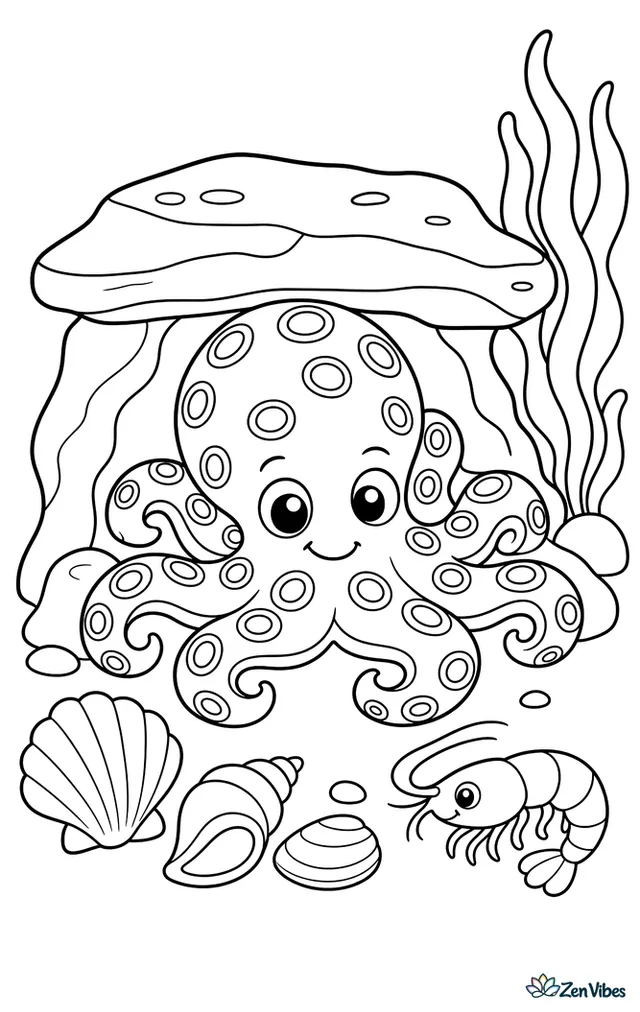
EasyAges 3–7Portrait
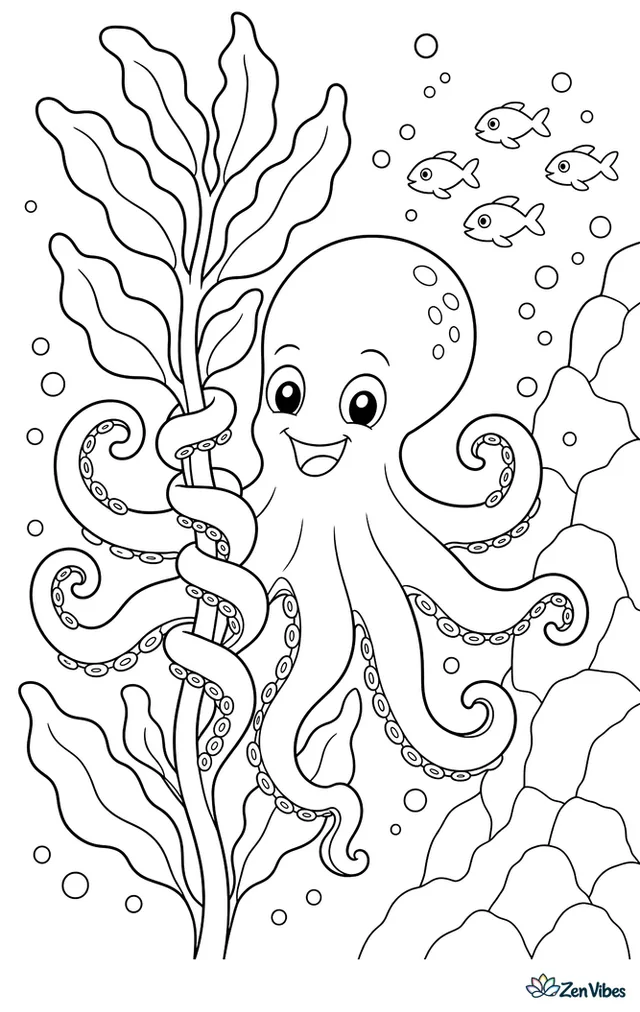
EasyAges 3–7Portrait
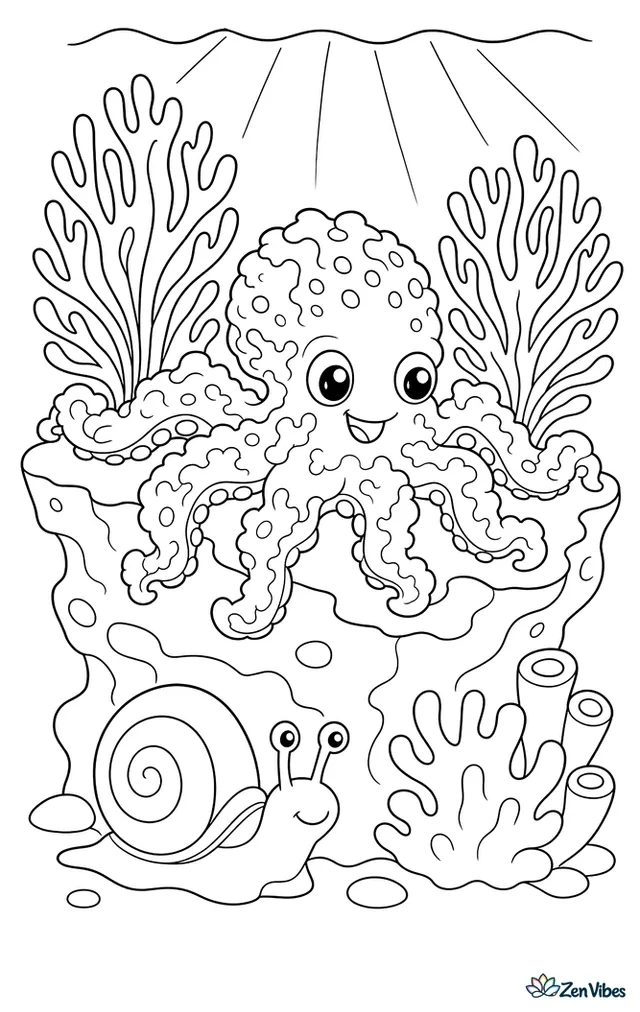
EasyAges 3–7Portrait
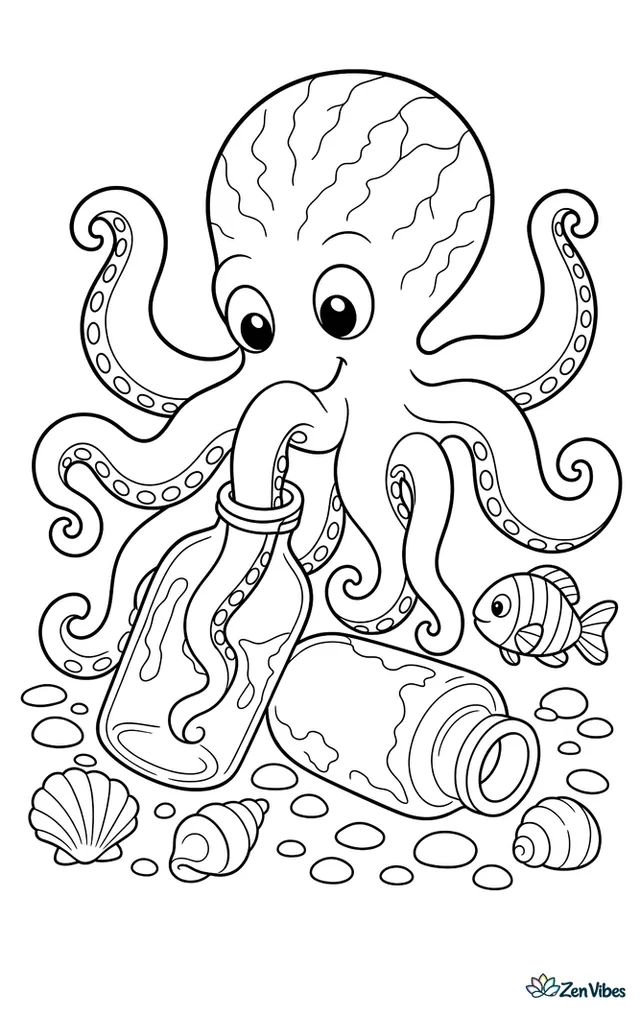
EasyAges 3–7Portrait
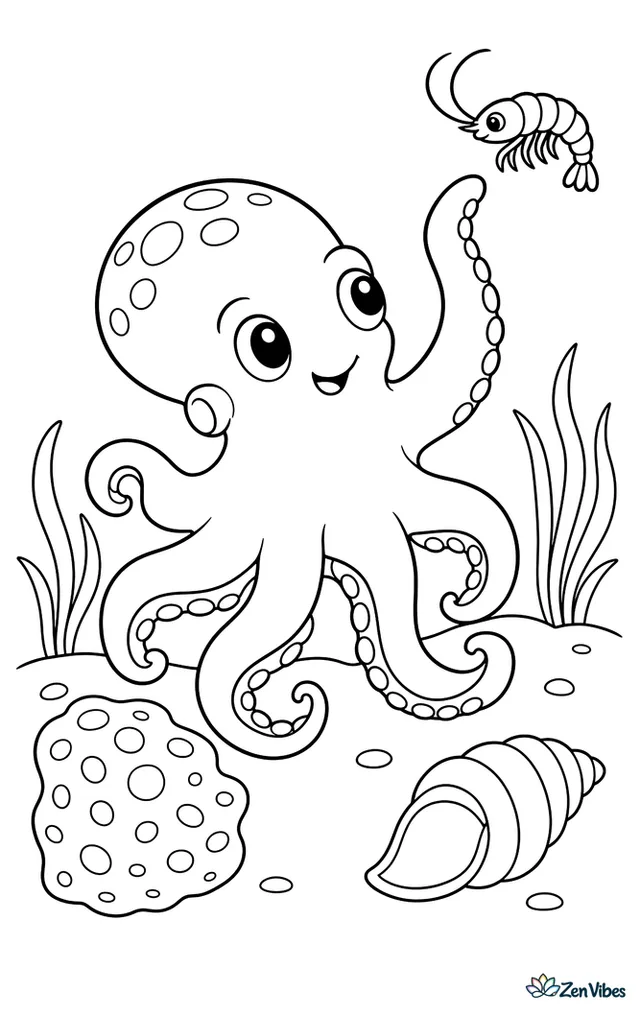
EasyAges 3–7Portrait
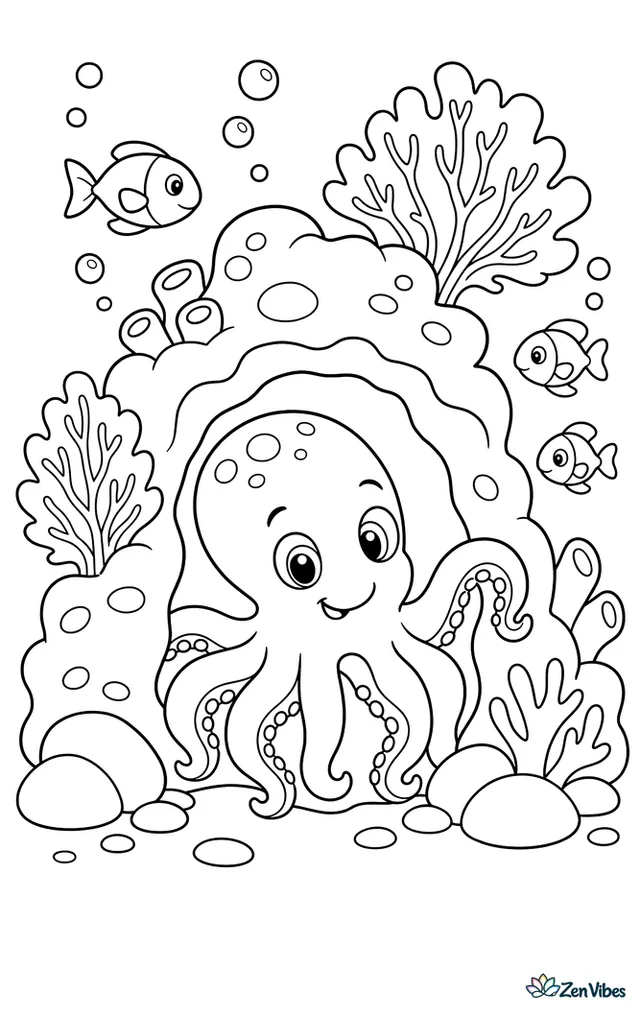
EasyAges 3–7Portrait
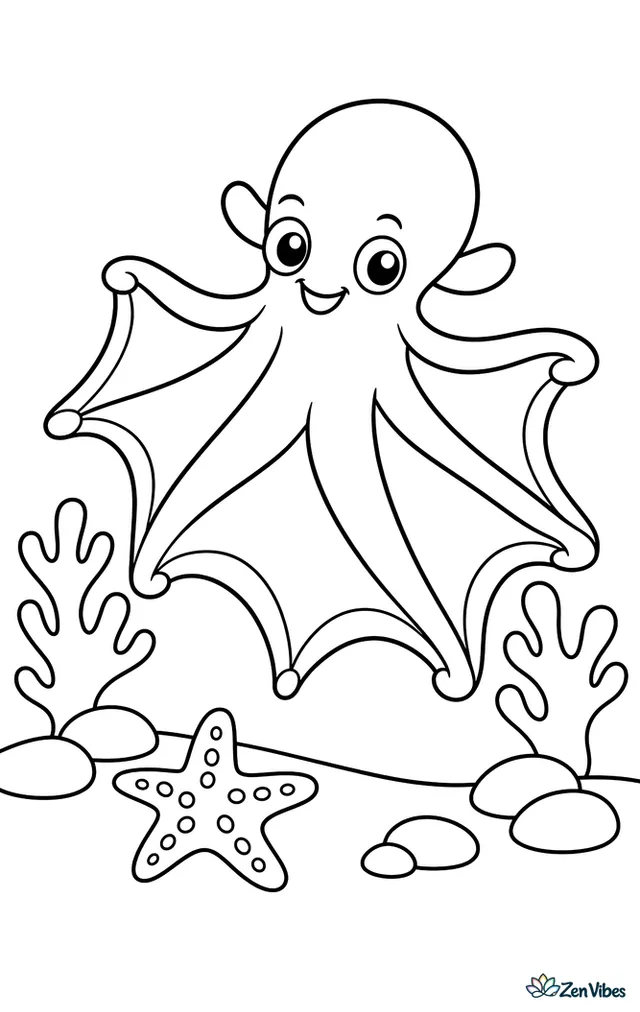
EasyAges 3–7Portrait
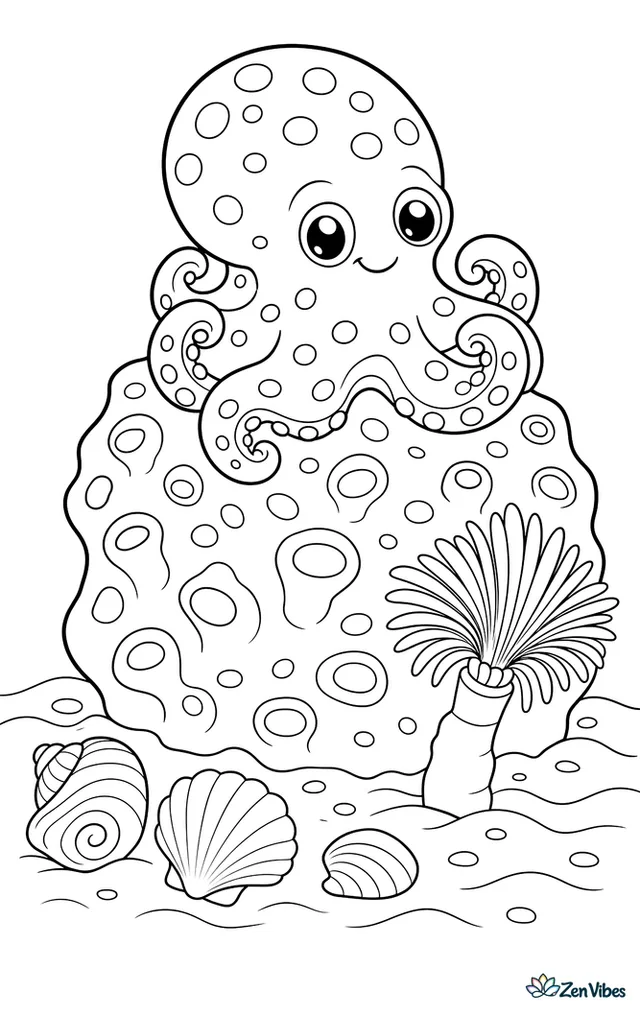
EasyAges 3–7Portrait
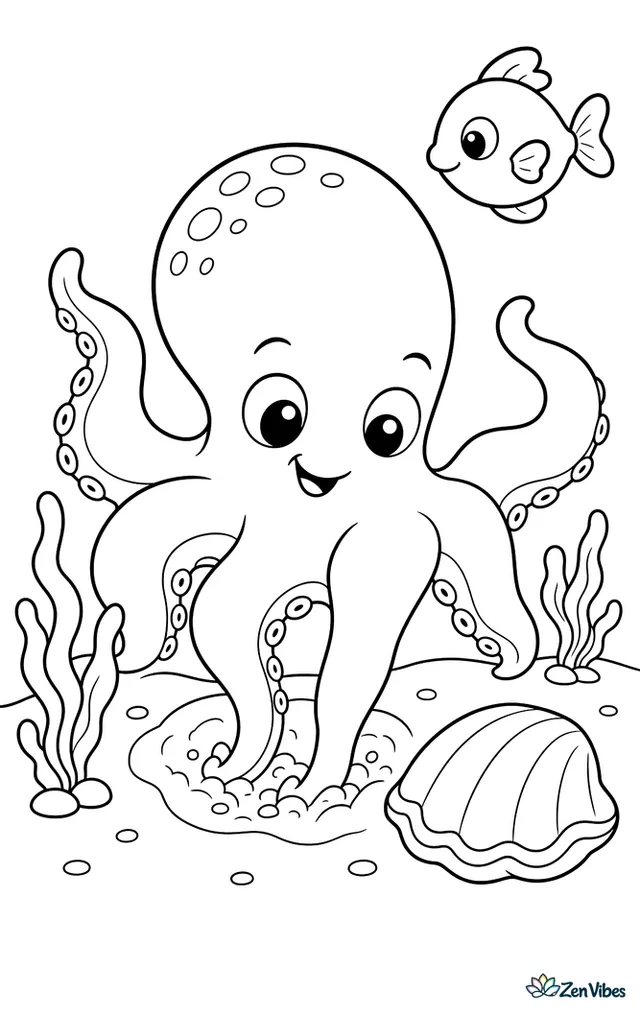
EasyAges 3–7Portrait
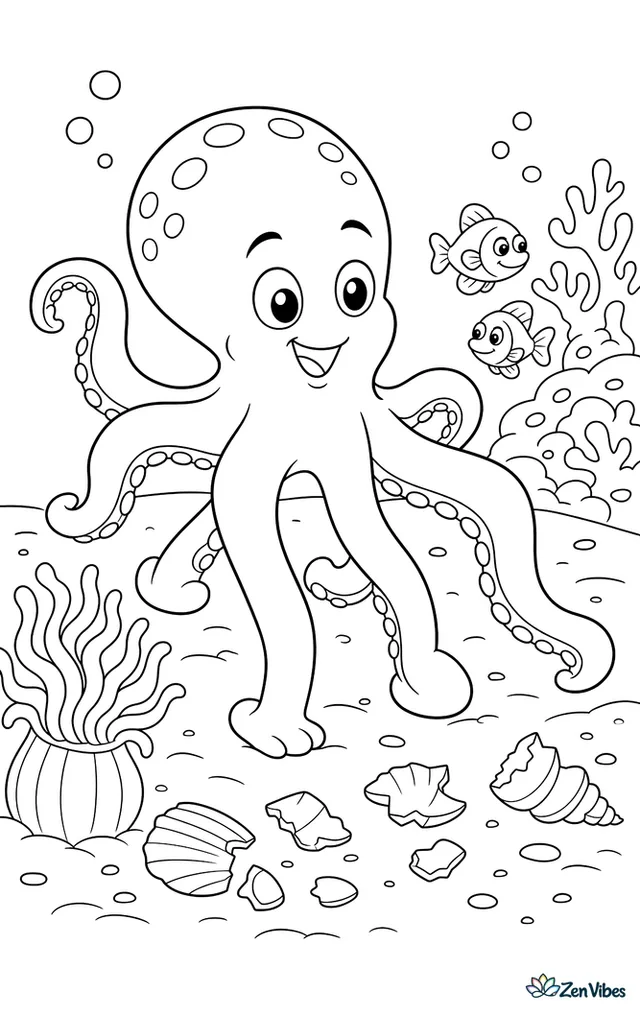
MediumAges 5–10Portrait
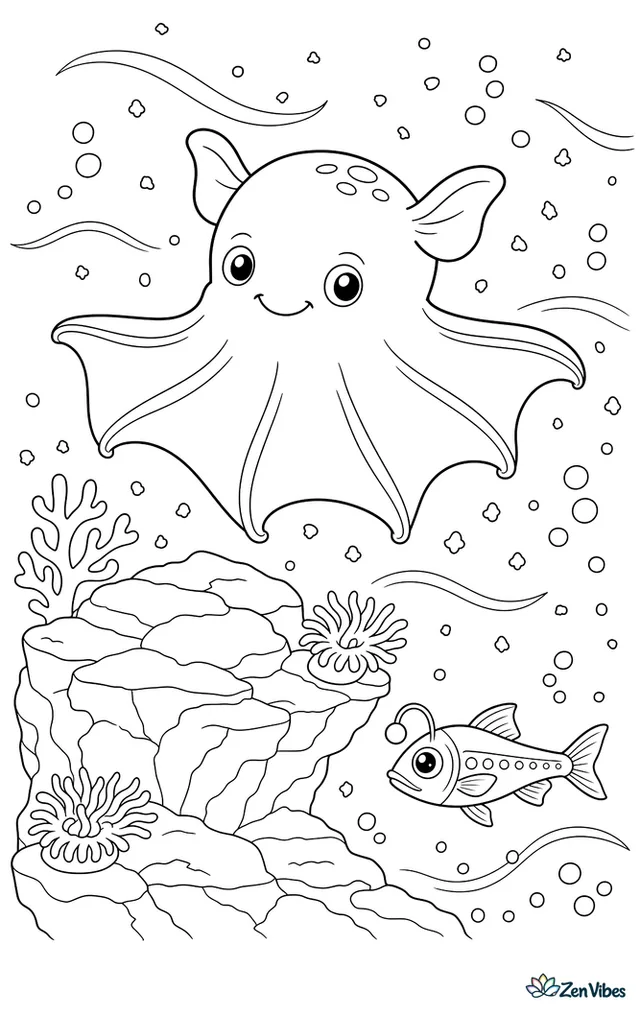
MediumAges 5–10Portrait
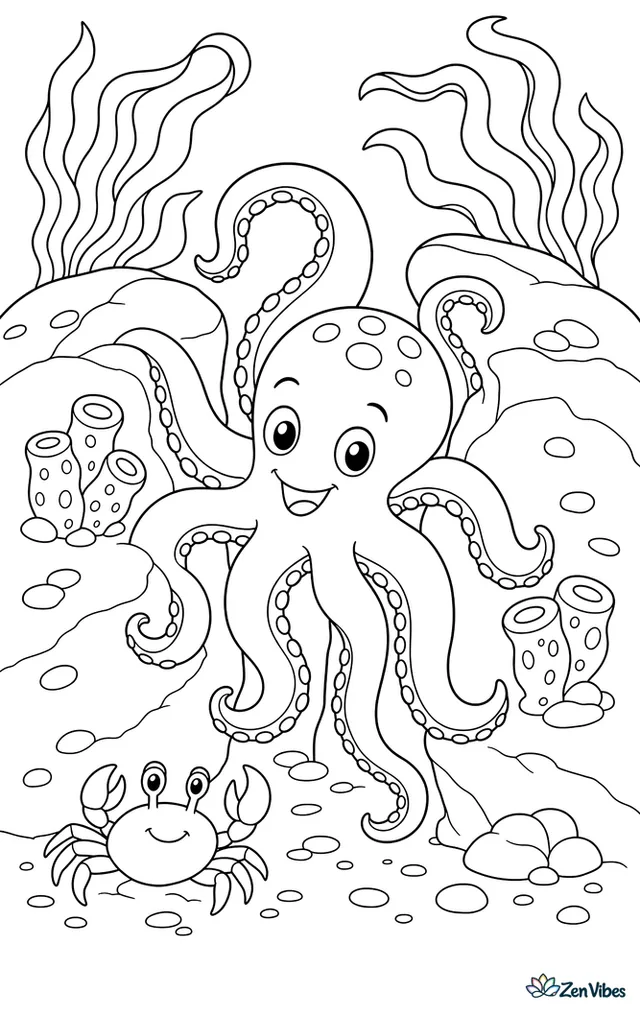
MediumAges 5–10Portrait
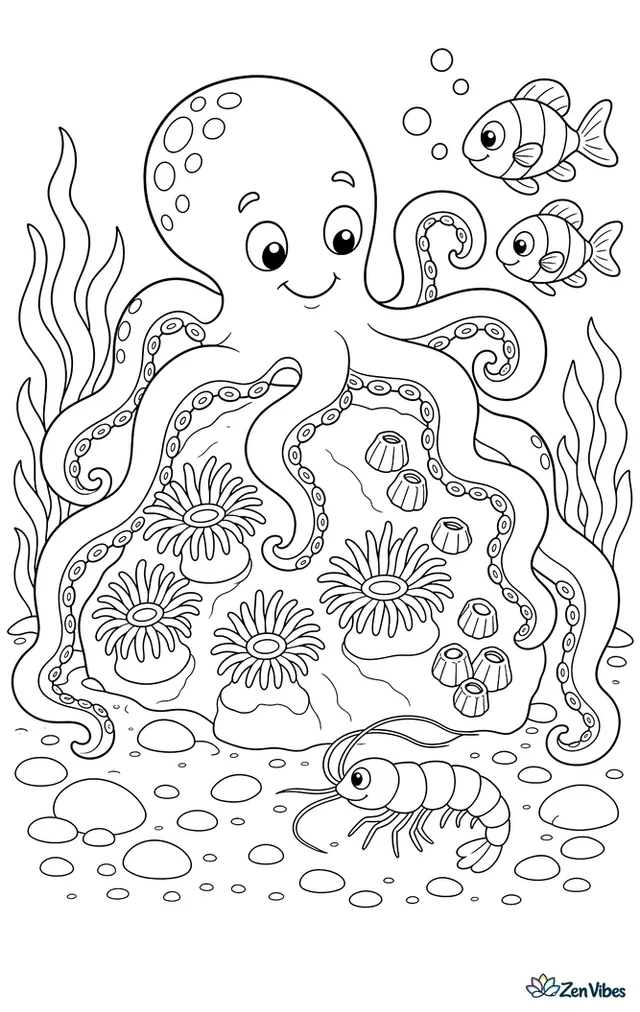
MediumAges 5–10Portrait
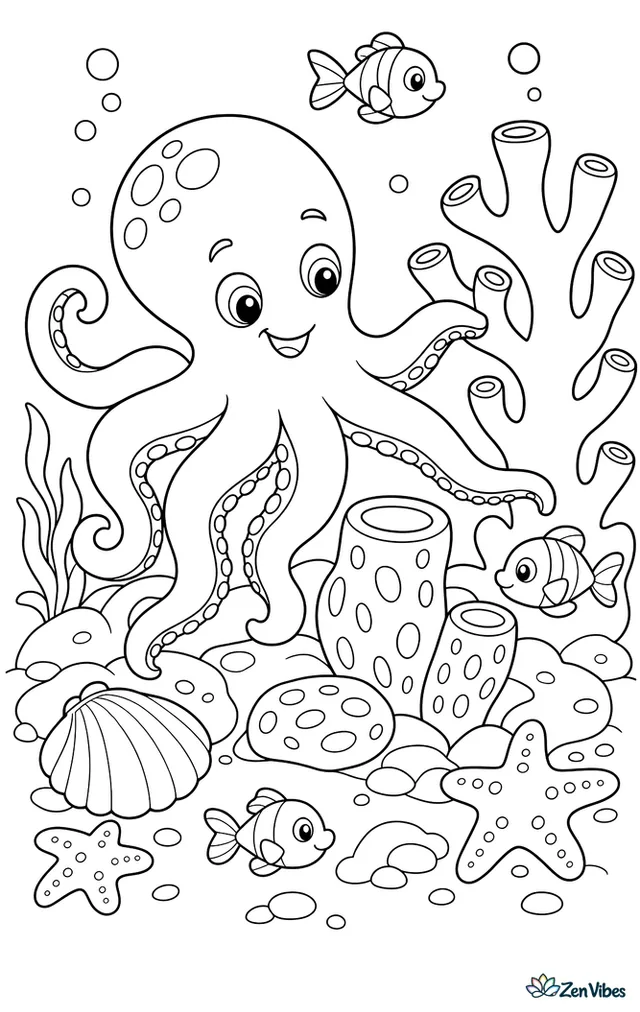
MediumAges 5–10Portrait
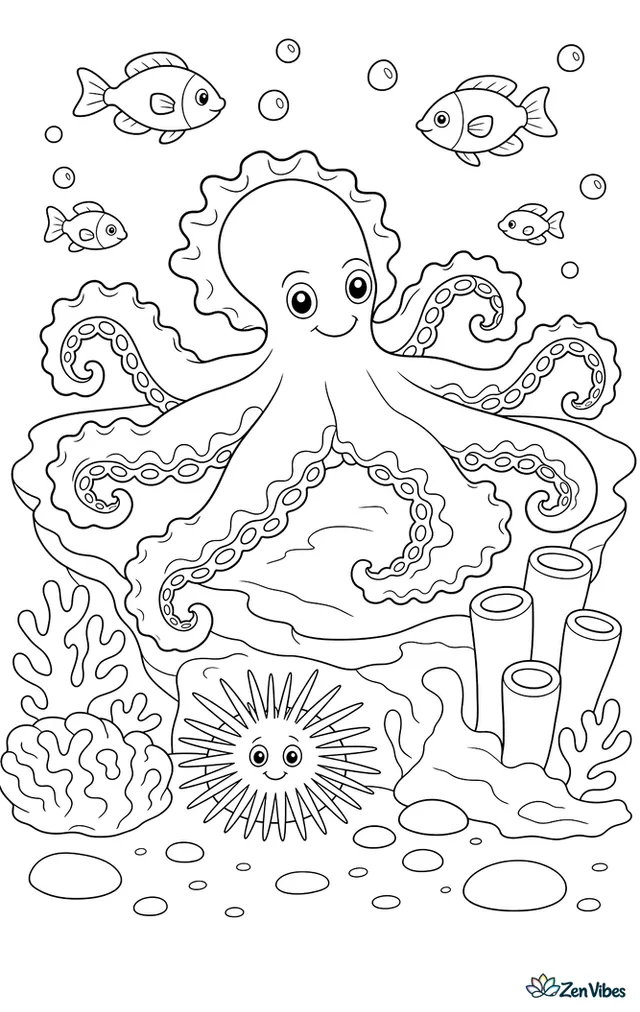
MediumAges 5–10Portrait
MediumAges 5–10Portrait
MediumAges 5–10Portrait
MediumAges 5–10Portrait
MediumAges 5–10Portrait
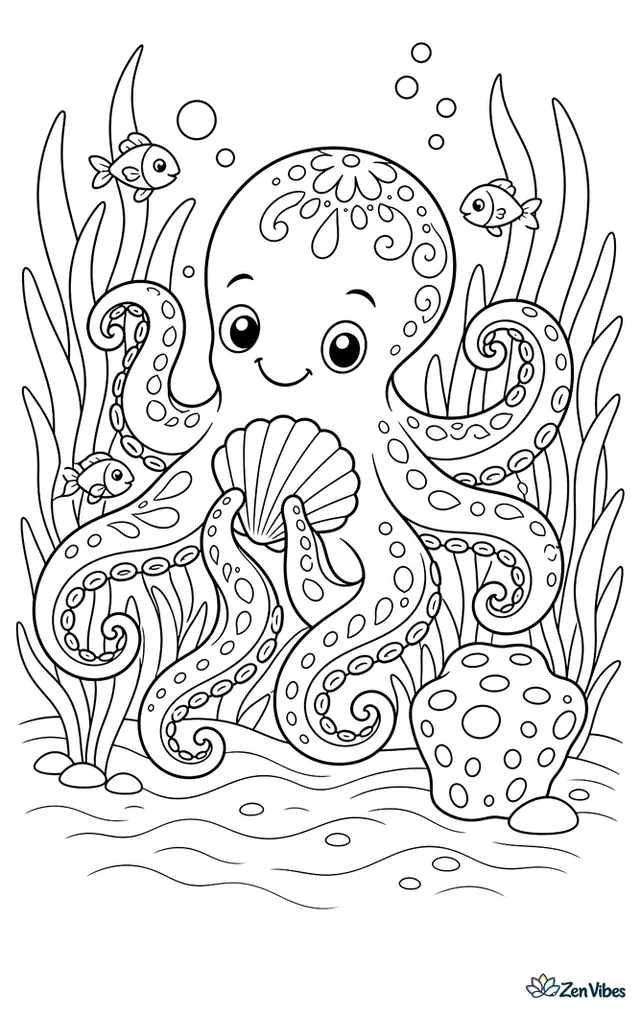
MediumAges 5–10Portrait
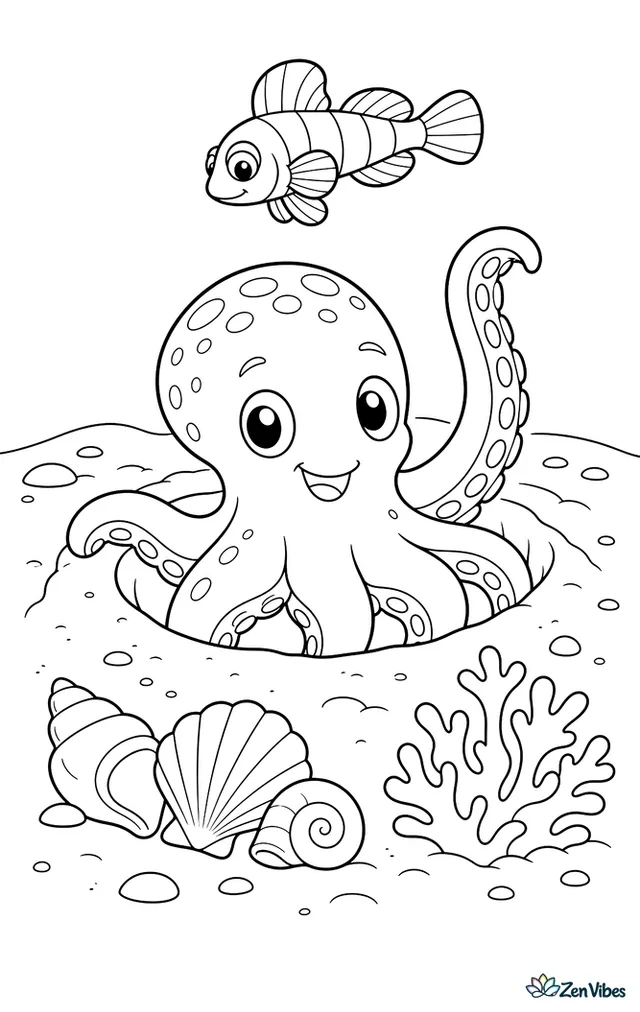
MediumAges 5–10Portrait
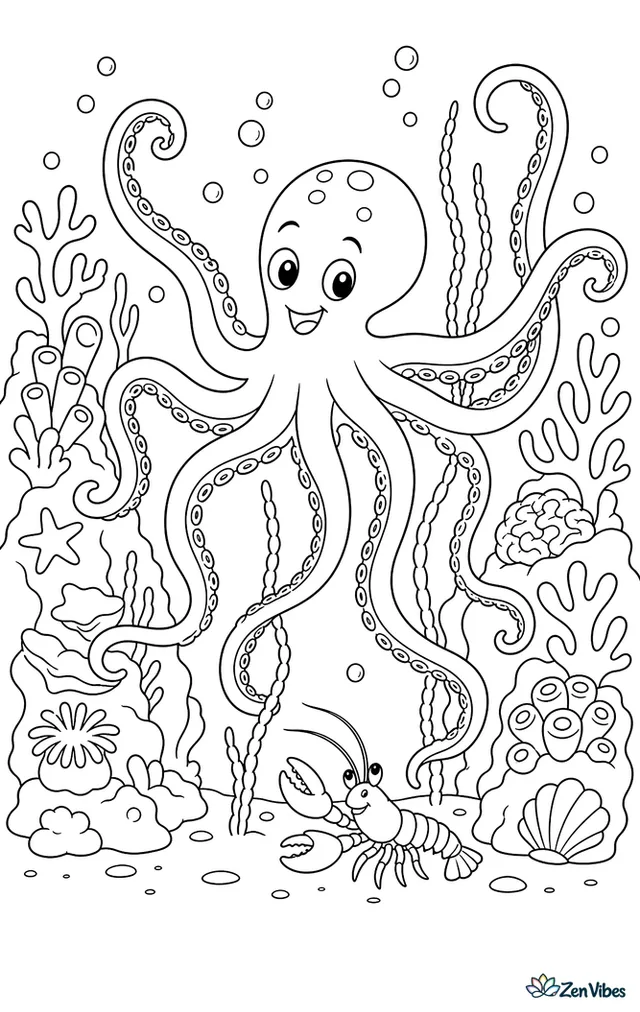
MediumAges 5–10Portrait
Print at actual size on plain paper. Crayons work well on the simpler pages, while pencils help with the kelp, coral, and bottle details.
Back to Ocean Animals
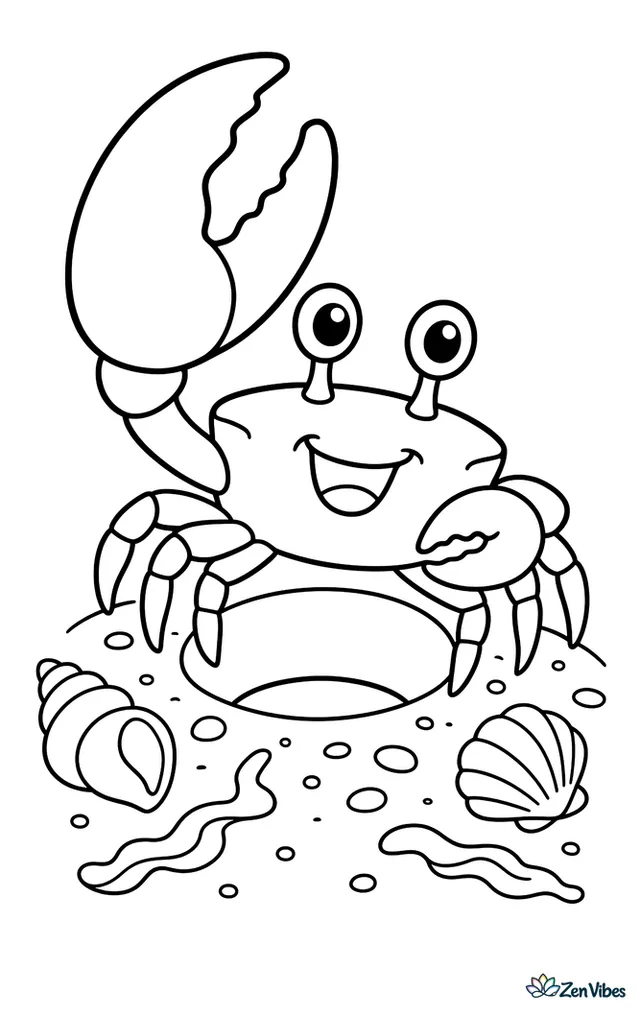
Playful crab coloring pages with a waving fiddler crab, a running ghost crab, and a horseshoe crab on shore. A good pick for little hands and calm ocean themes.
27 pages
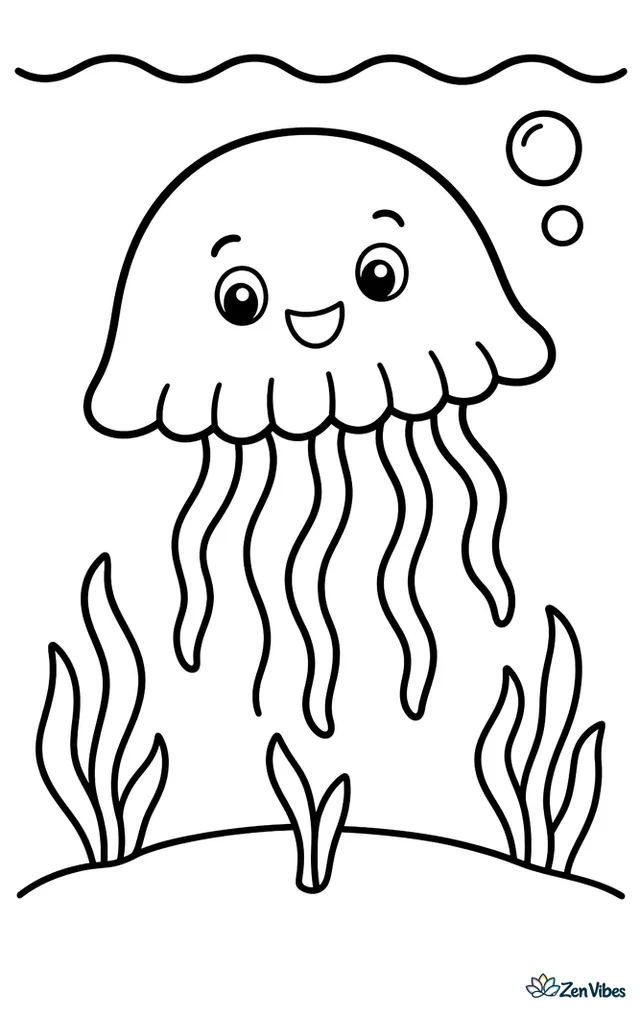
Soft, drifting jellyfish with big simple shapes at the start and longer tentacles later on. A calm ocean set for little kids, older siblings, and adults who want easy coloring.
27 pages
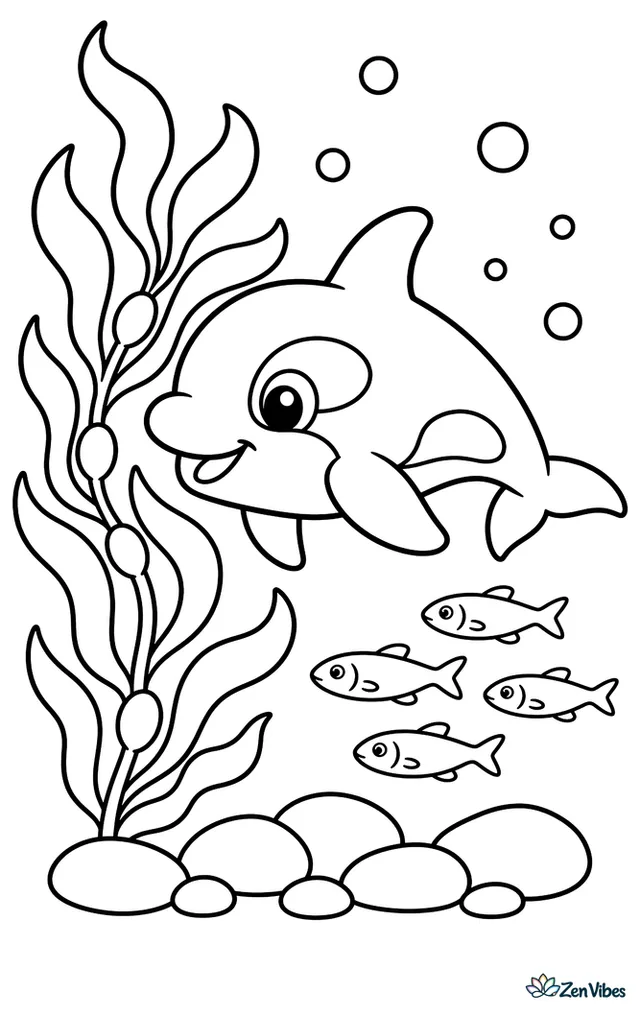
Orca coloring pages with breaching whales, moonlit water, kelp, and icy seas. Great for little hands who want bold ocean animals and older kids who like a bit more action.
22 pages
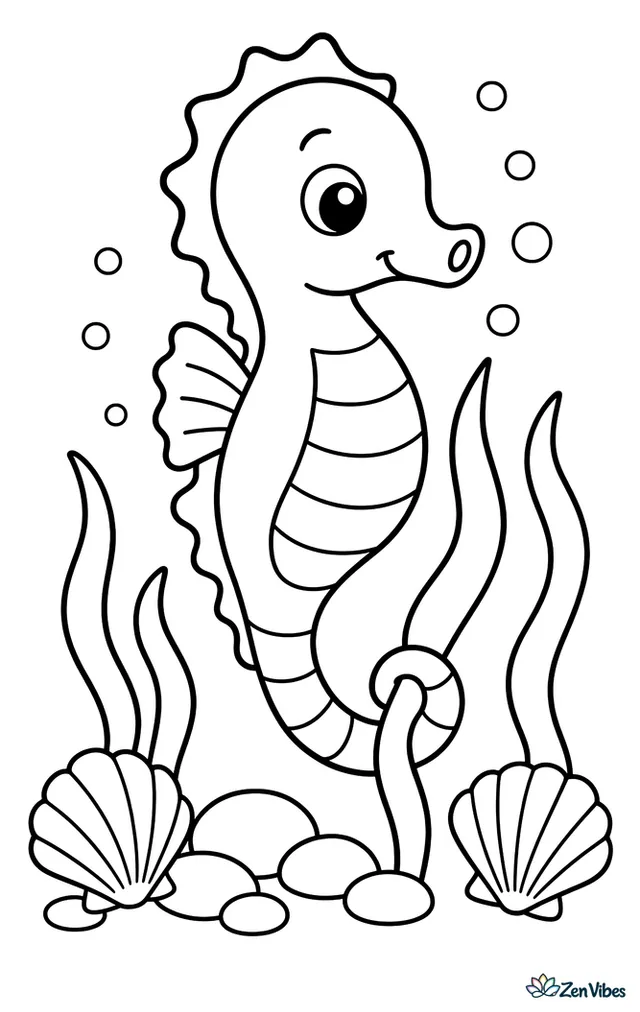
Gentle ocean coloring pages with curled seahorses, kelp, reeds, and reef scenes. A calm choice for little kids, with later pages that still keep older colorers interested.
27 pages
From a whale shark in a lagoon to a goblin shark in deep water, these shark coloring pages give little kids and older shark fans plenty to picture.
31 pages
Calm whale coloring pages with a humpback bubble net, a beluga and calf, and a narwhal at twilight. Good for little hands, ocean lessons, and relaxed coloring time.
31 pages
Gentle bat coloring pages with simple flying, roosting, and fruit-eating scenes. A good pick for little hands, night animal units, or anyone who wants bats without a spooky feel.
31 pages
Friendly bear coloring pages, from a simple polar bear cub and panda with bamboo to a grizzly by a lake. Easy to hand to little kids, still pleasant for older ones.
22 pages
A bee set with hives, clover, blossoms, and garden scenes, from very simple pages for little hands to fuller ones that keep older kids coloring longer.
31 pages
Butterflies land on milkweed, clover, orchids, and zinnias in pages that start simple and grow more detailed. Easy to pick for little kids, older siblings, or a quiet grown-up break.
31 pages
Calm camel coloring pages with sand dunes, an oasis, a resting calf, and a caravan at sunset. Easy picks for little hands, with a few fuller desert scenes for older kids.
26 pages
Cozy cat pages with boxes, yarn, windows, chairs, and sleepy poses, from big simple outlines for little kids to fuller scenes older kids and adults can settle into.
44 pages
Octopuses are naturally wiggly and interesting, but these pages keep the shapes readable. Little hands can follow the curling arms, color the shell or jar, and still feel like they finished the whole picture.
The early pages have roomy spaces and one main animal to focus on. As you move along, the coral, kelp, bottles, and reef details give older kids a bit more to do without turning the page into a wall of tiny lines.
If you are talking about camouflage, habitats, or life on the seafloor, this set gives you easy scenes to point to. You can compare an octopus hiding in a den with one drifting through kelp, then talk about how each place helps it stay safe.
It also pairs well with other ocean animal pages when you want contrast. Whales bring big open-water shapes, sharks feel sharper and bolder, and these octopus pages stay soft, bendy, and full of hiding places.
These pages are a good excuse to slow down and change colors from arm to arm, rock to rock, or bottle to bottle. Even one sea creature can look very different depending on whether your child goes bright, sandy, or deep-ocean dark.
Usage: All designs in this set are original Zen Vibes drawings. Free for personal, classroom, and therapy use. Full terms of use.